
How it works
Four steps, and the useful part is that each one feeds the next. Nothing is entered twice.
Everything you cook, in one place
Import recipes from a link or from an export file, photograph a packet to add a product, or write your own. Ingredient lines are matched to real foods so the nutrition follows.

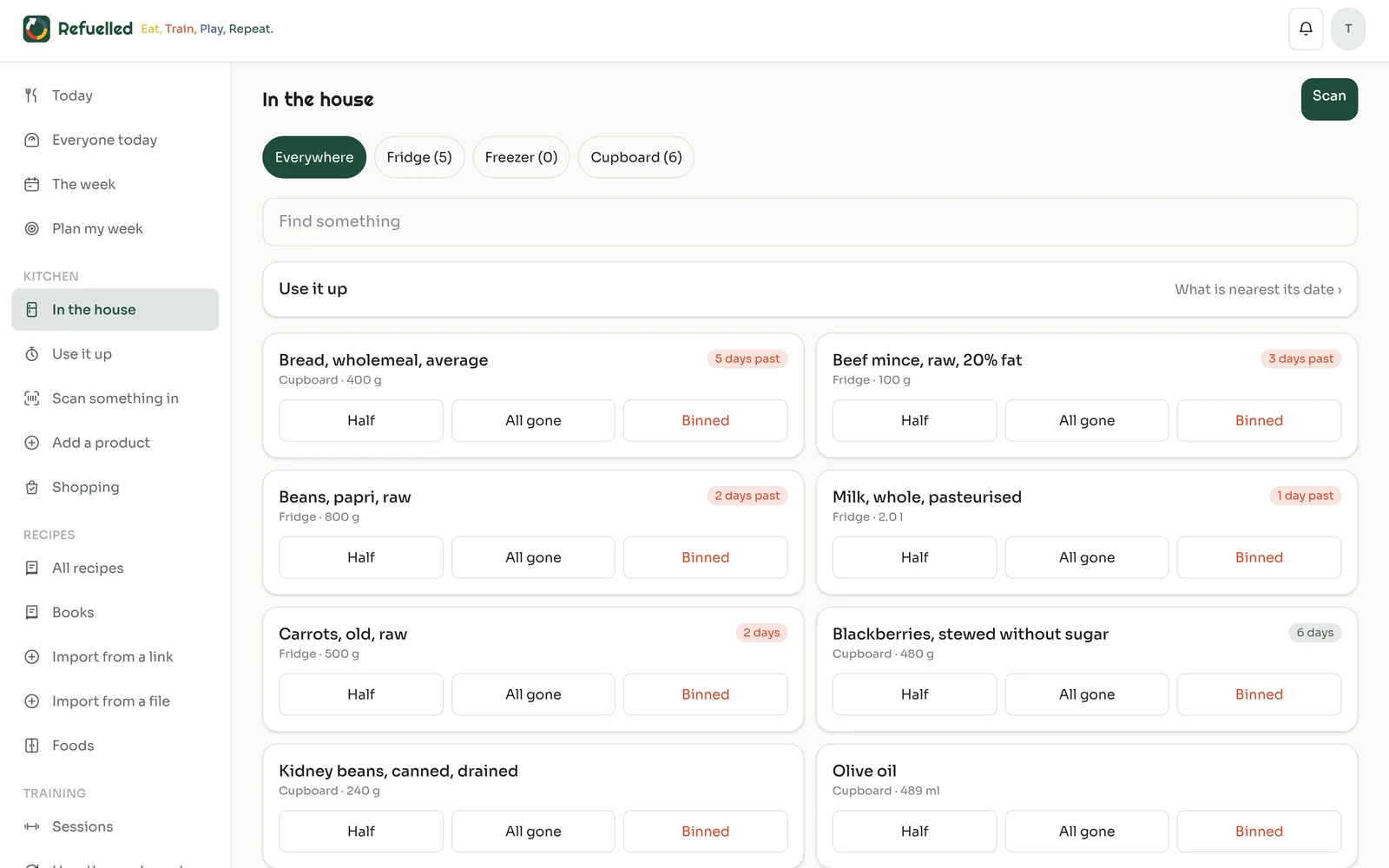
The cupboards, honestly
Scan things in as you unpack. The app knows what a tin weighs and what a pack of eight contains, so amounts stay sensible without you doing arithmetic.
A week that fits the people in it
Each person has their own energy and macro targets, worked out from their profile and their goal. Plan by hand, or ask for a proposal and change the bits you do not fancy.

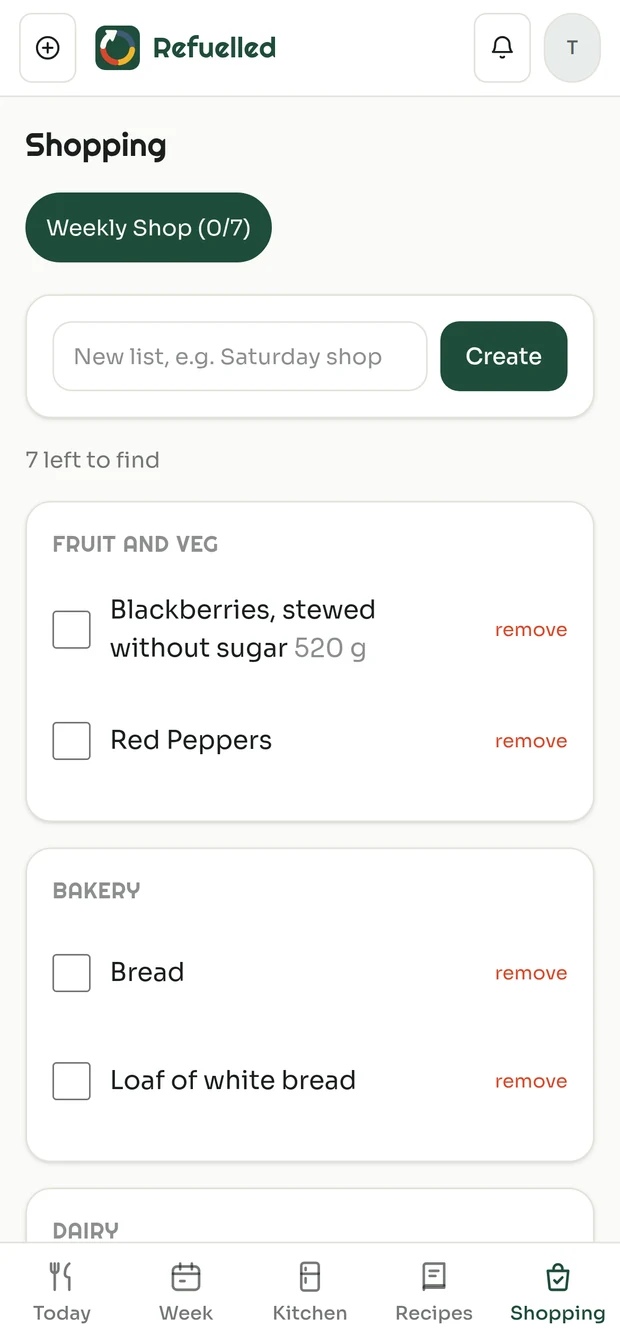
A shopping list that is actually short
The plan minus the cupboards, grouped the way a supermarket is walked, tickable one-handed. Put the shopping away and it goes back into the pantry.
Where the numbers come from
Generic foods come from CoFID, the UK government's composition dataset. Branded products come from Open Food Facts, and from photographs of the packet when they are not there yet. Energy and macros are worked out from those figures, the weight you used and the recipe's yield, by our own code.
A model can read a label or suggest a meal. It is never allowed to assert a nutrition figure, and a figure you type yourself is marked as your own estimate.More about the data.